
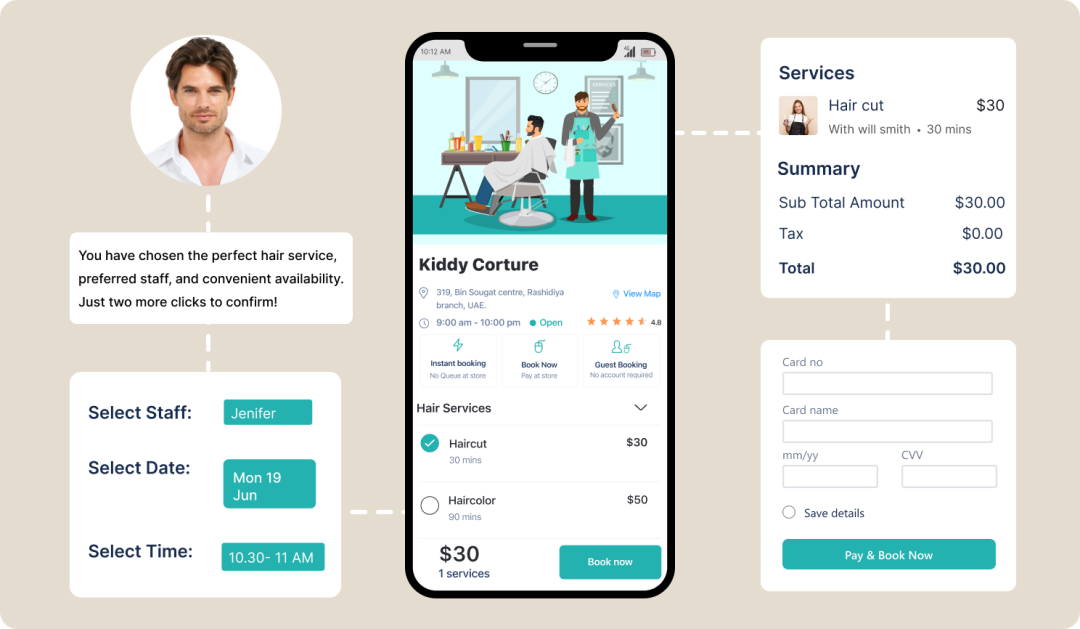
Is it time you gained back your data?
Key takeaways
- Platforms drive short-term bookings but create long-term dependency
- You don't own the patient relationship — the platform does
- Margins erode through commissions and recurring fees
- Your brand is diluted through side-by-side comparison
- Services become commoditised, competing on price and availability
- You lose valuable data that should inform your growth
- Subscription creep quietly increases costs over time
- Over-reliance weakens your direct acquisition channels
- Sustainable growth comes from owning the relationship, not renting it
Third-party booking platforms have become a default growth channel for many clinics. They promise visibility, convenience, and a steady flow of new patients — and in the early stages, they often deliver. But what looks like growth on the surface can create deeper structural problems over time, especially when these platforms become a primary source of demand rather than a supporting channel.
The Appeal (And Why It Works)
Platforms position themselves as growth engines.
They offer:
- instant exposure
- built-in demand
- simplified booking
For clinics, especially early on, this feels like:
a shortcut to growth
And in the short term:
it often works
The Trade-Off You Don’t See
Every booking that comes through a third-party platform comes with a hidden exchange:
You gain:
- visibility
You lose:
- control
Over time, this compounds.
Streamline
Custom apps for your clinic are more affordable than ever. Contact us today to streamline your clinic.
This is the biggest issue.
When a patient books through a platform:
- the platform owns the relationship
- the platform controls communication
- the platform controls re-engagement
What this means:
You cannot:
- remarket effectively
- build long-term loyalty
- control the patient journey
👉 You are renting access.
Not building an asset.
Cost #2: Margin Erosion
Most platforms charge:
- commission per booking
- subscription fees
- or both
At first:
- it feels manageable
Over time:
- it eats into profitability
Especially when:
- high-value treatments are involved
👉 You end up paying repeatedly for:
patients you could have acquired directly
Web DesignIs your website turning visitors away before they book?
See Clinic Web Design →Cost #3: Brand Dilution
On a platform:
- you are one of many
- you are compared side-by-side
- price and reviews dominate
Your brand becomes:
- less distinct
- less differentiated
- less memorable
What patients see:
a list of options
Not:
a clearly positioned clinic
👉 You lose the ability to control perception
Cost #4: Commoditisation
Platforms turn services into:
- comparable units
- interchangeable options
This drives competition toward:
- price
- availability
- ratings
Not:
- expertise
- experience
- positioning
👉 You are no longer:
a specialist
You are:
an option
Cost #5: Data Loss
The platform captures:
- user behaviour
- preferences
- booking patterns
You don’t.
This means:
You lose:
- insight
- optimisation opportunities
- long-term strategy advantage
👉 Data becomes their asset.
Not yours.
Cost #6: Subscription Creep
This is where it compounds.
You start with:
- one platform
Then:
- another for visibility
- another for bookings
- another for reviews
Before long, you’re paying for:
- multiple subscriptions
- overlapping services
- diminishing returns
👉 Growth becomes:
fragmented and expensive
Cost #7: Reduced Direct Demand
The more you rely on platforms:
- the less you invest in your own presence
- the weaker your direct channels become
Over time:
- fewer patients come directly
- more come through paid platforms
👉 Dependency increases.
Leverage decreases.
The Illusion of Growth
Platforms can make your business look like it’s growing:
- more bookings
- more visibility
- more activity
But underneath:
- margins shrink
- brand weakens
- control disappears
👉 It’s growth without ownership
Where Platforms DO Make Sense
To be clear:
They are not useless.
They work well for:
- initial traction
- filling gaps in capacity
- testing demand
But they should be:
a channel
Not:
the foundation
The Better Model: Own the Relationship
High-performing clinics shift toward:
1. Direct Acquisition
- website-driven enquiries
- clear service pages
- strong positioning
2. Strong Brand Presence
- differentiated messaging
- clear expertise
- consistent positioning
3. Controlled Booking Experience
- your system
- your process
- your data
4. Long-Term Patient Value
- retention
- repeat treatments
- referrals
👉 This builds:
a sustainable growth engine
The Strategic Shift
Instead of asking:
“How do we get more bookings?”
Ask:
“Who owns the relationship with our patients?”
That answer determines:
- your margins
- your control
- your long-term growth
Final Thought
Third-party platforms are not the problem.
Over-reliance on them is.
If you build your business on:
- rented attention
- rented demand
- rented relationships
You will always be:
paying to grow
But if you invest in:
- your website
- your positioning
- your direct channels
You build something different:
an asset that compounds over time