Article highlights
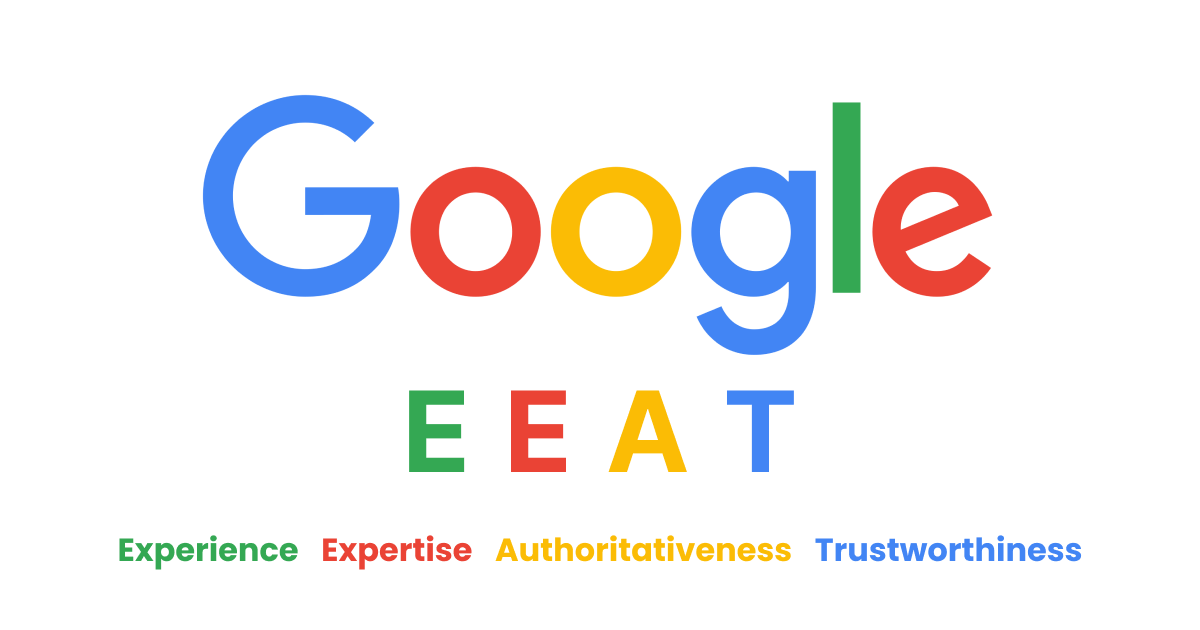
- EEAT stands for Experience, Expertise, Authoritativeness, and Trustworthiness—Google's trust evaluation framework.
- Most clinics mistake EEAT for adding visible trust elements like credentials and photos; these are just surface decorations, not real EEAT.
- True EEAT is built off-page in the real world through verifiable credentials, independent validation, and long-term reputation.
- AI systems can't easily verify real-world trust signals, so genuine EEAT gives clinics a major competitive advantage.
EEAT stands for:
- Experience
- Expertise
- Authoritativeness
- Trustworthiness
In plain English: Google (and increasingly AI systems) asks, "Would a real person trust this source in the real world?"
It's not a technical SEO trick. It's a quality evaluation system originally used by Google's human raters, now influencing how search engines and AI decide what information is reliable enough to show or reuse.
The Big Misunderstanding Most People Have
A lot of people — including many in the aesthetics and medical marketing world — think EEAT means adding visible "trust elements" directly onto a webpage.
Things like:
- "I'm a qualified doctor with 15 years' experience" stories
- Expert quotes
- Before-and-after treatment photos
- Professional headshots and clinic images
- Trust badges or logos
- Detailed author bios with credentials
- Schema markup
These elements can make a page look more professional and trustworthy. But they are not EEAT itself. They are simply content features — surface decorations that support the perception of trust. You can add them to almost any page, but they don't create real underlying authority.
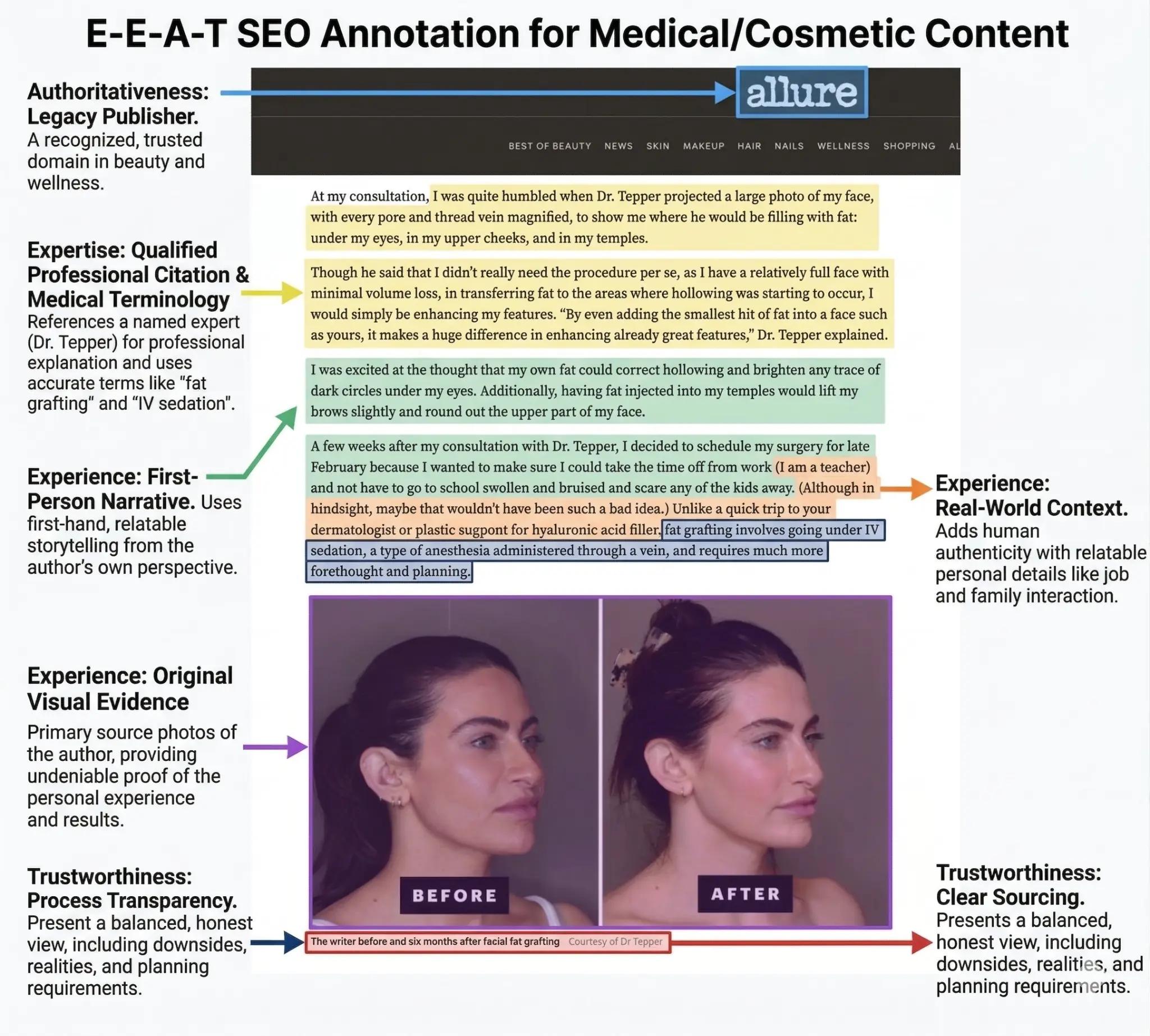
As the image illustrates, these features are easy to replicate. They can help user perception, but they don't prove genuine expertise or trustworthiness on their own.
What EEAT Really Is
True EEAT is an evaluative framework, not a checklist. It looks at whether the source would be trusted outside of Google or any website.
The strongest signals are usually off-page and hard to fake quickly:
- Verifiable real-world credentials (e.g., registration with the General Medical Council, hospital privileges, specialist registers)
- Independent validation (peer-reviewed research, conference speaking, professional body recognition)
- Long-term reputation and consistent quality over years
- Corroboration from other trusted external sources
- Genuine institutional or professional backing that exists independently of your website
These signals live in the real world — medical registries, academic records, peer networks — not just on a nicely designed page.
Real EEAT is built off-page, in the real world. It's what you've actually achieved, not what you claim on your website.
Why This Matters for You in the Medical and Aesthetics Sector
In today's AI-driven world, search engines and tools like Google's AI Overviews are no longer just ranking pages — they're reading, synthesising, and reusing information.
AI systems are very good at spotting repeated text patterns, but they struggle to verify deep, real-world trust signals (they can't easily check live medical registries or long-term patient outcomes).
This is why genuine EEAT becomes a massive advantage when you're researching clinics, surgeons, or treatments. Content backed by real, independently verifiable expertise stands out and is more likely to be trusted and cited by both users and AI.
When choosing a medical or aesthetics provider, focusing on real substance — actual qualifications, verifiable experience, and independently confirmed results — helps you cut through polished marketing and find truly reliable sources.
Quick Takeaway
When you visit a medical or aesthetics website, don't just judge it by how professional it looks or how many before-and-after photos it has.
Ask:
- Is there real, independently verifiable expertise here?
- Would I trust this information if it came from a colleague or a professional referral?
- Does the authority exist outside this webpage?
That's what EEAT really measures.